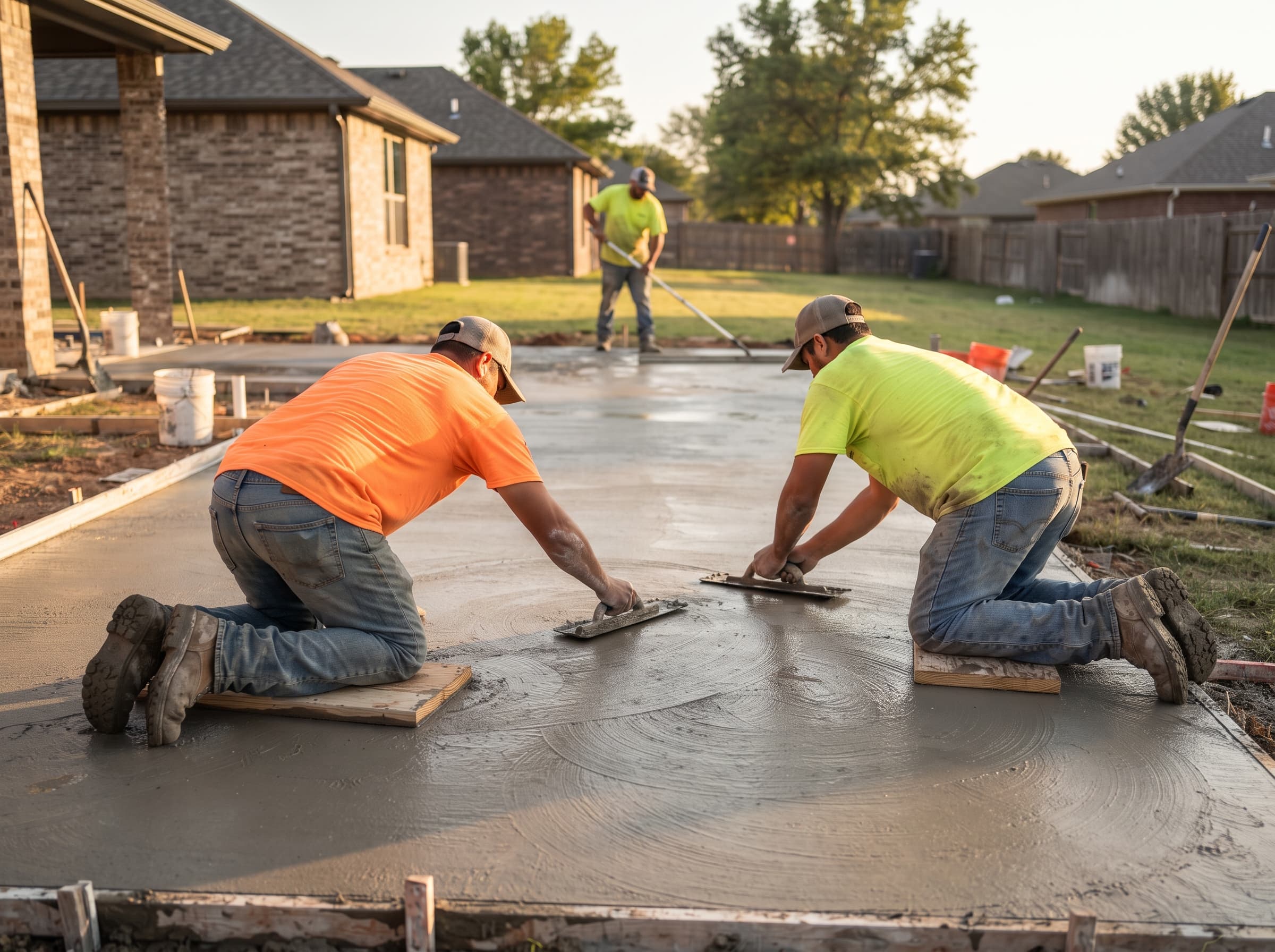
Oklahoma sits on some of the most expansive clay soil in the country. When it rains, that clay swells; in an August drought, it shrinks and pulls away. Foundations, driveways, patios, and anything else sitting on top of it ride that movement season after season.
Concrete doesn't fail because concrete is weak. It fails when it's asked to bridge soil that's moving underneath it with nothing in between.
What good prep actually does
Excavating to a consistent depth and compacting the subgrade removes the soft spots that let a slab settle unevenly. A compacted aggregate base then does two jobs: it spreads loads across the clay, and it drains water away from the slab's underside. That matters because moisture change is what makes clay move in the first place.
Reinforcement doesn't stop concrete from ever cracking; it holds any crack tight so it can't widen, offset, or grow. And when control joints are cut in the right places, at the right depth, and at the right time, they give the slab a straight, clean place to relieve stress instead of a jagged one through the middle.
Drainage is half the battle
Correct slope, downspouts routed away, and drains where the yard demands them all help a slab shed water. A slab that sheds water sits on clay that stays at a steadier moisture level, which means less movement, which means fewer cracks. When we walk a site, we're reading water before we're reading anything else.
So when you're comparing contractors, skip the promises about the concrete itself and ask about everything under and around it. That's where Tulsa slabs live or die.