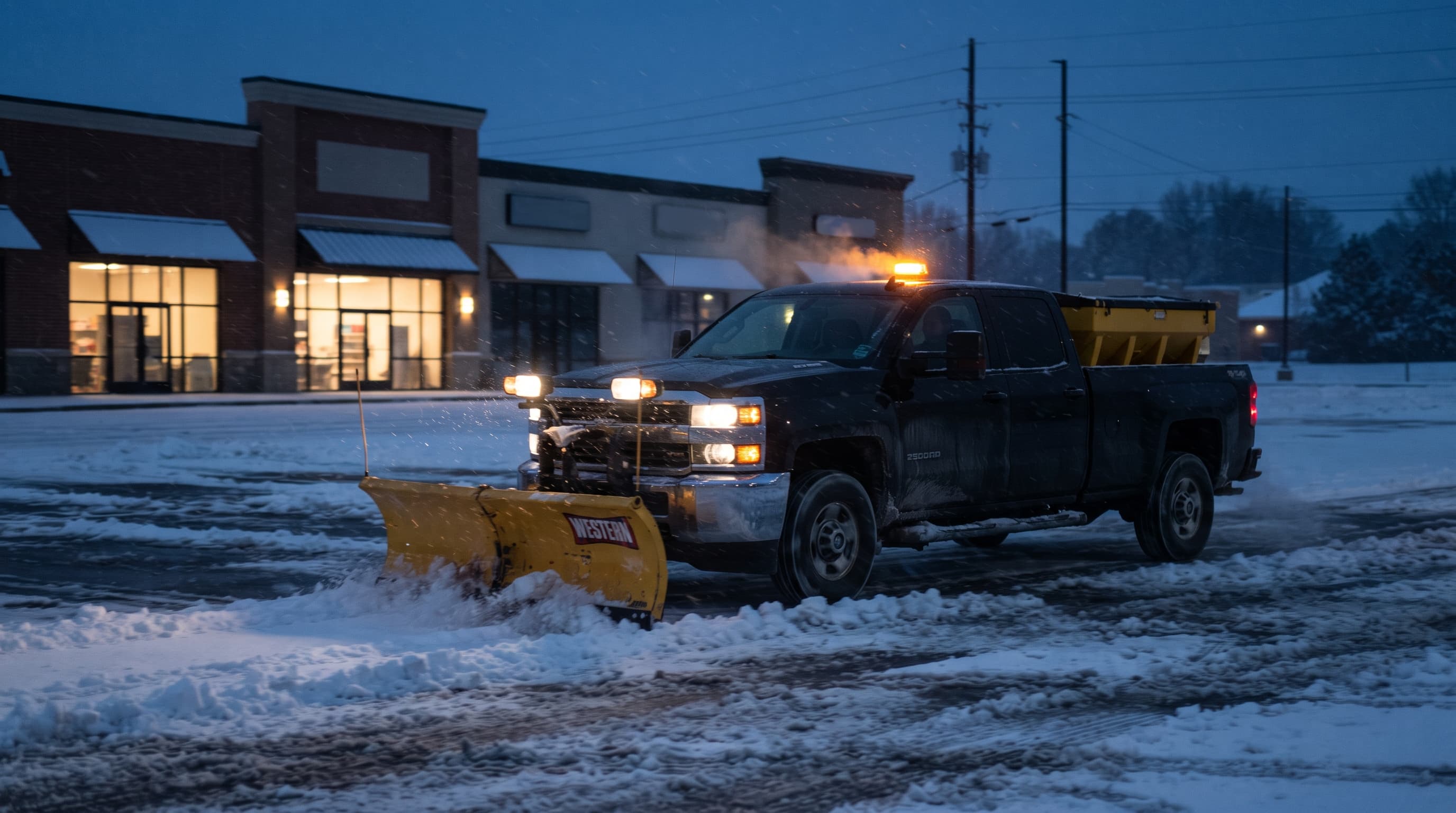
Oklahoma winters are short but violent on concrete: warm-cold swings put slabs through dozens of freeze-thaw cycles a season, and every cycle pressurizes any water sitting in the surface. Winter damage is mostly water damage on a schedule.
What actually causes the damage
Freeze-thaw: water in the slab's pores expands about 9% when it freezes. Enough cycles with enough water and the surface starts to scale and flake. That's why drainage and sealing matter more than any single cold snap.
De-icers: rock salt (sodium chloride) increases the number of freeze-thaw cycles the surface endures and is hardest on concrete less than a year old. If you need traction chemistry, calcium or magnesium chloride products are gentler; plain sand is gentler still.
The winter habits that work
Keep water moving off the slab before the freeze: clean gutters, downspouts routed away, low spots corrected. Seal stamped and colored work on schedule. Shovel promptly with a plastic-edged blade, use the mildest de-icer that does the job, and rinse salt residue off in the first spring thaw.
Commercial properties: pre-treating ahead of a storm and clearing promptly is concrete preservation as much as liability management. The lots that get maintained are the lots that don't spall.